
.01
Consistent terminology
We agree the project glossary before work starts and apply it across the whole set, even when several translators are working on it.
INSIGHT technical translation agency
We translate documentation sets for equipment suppliers, contractors and manufacturers working with Russian customers. We work mainly in English and Chinese, and in other languages on request. Terminology stays consistent across the set, and the layout follows the source. Based in St Petersburg, in business since 2017.


A documentation set runs to hundreds of sheets and goes through revisions, and it has to stay consistent throughout. A term on sheet 7 must match sheet 340, frames and title blocks must stay in place, and revision B a year later should not mean retranslating the whole project.
We work in our own translation environment with translation memory and a project glossary, so repetitions and unchanged segments cut the cost and turnaround of the next revision.
We agree the project glossary before work starts and apply it across the whole set, even when several translators are working on it.
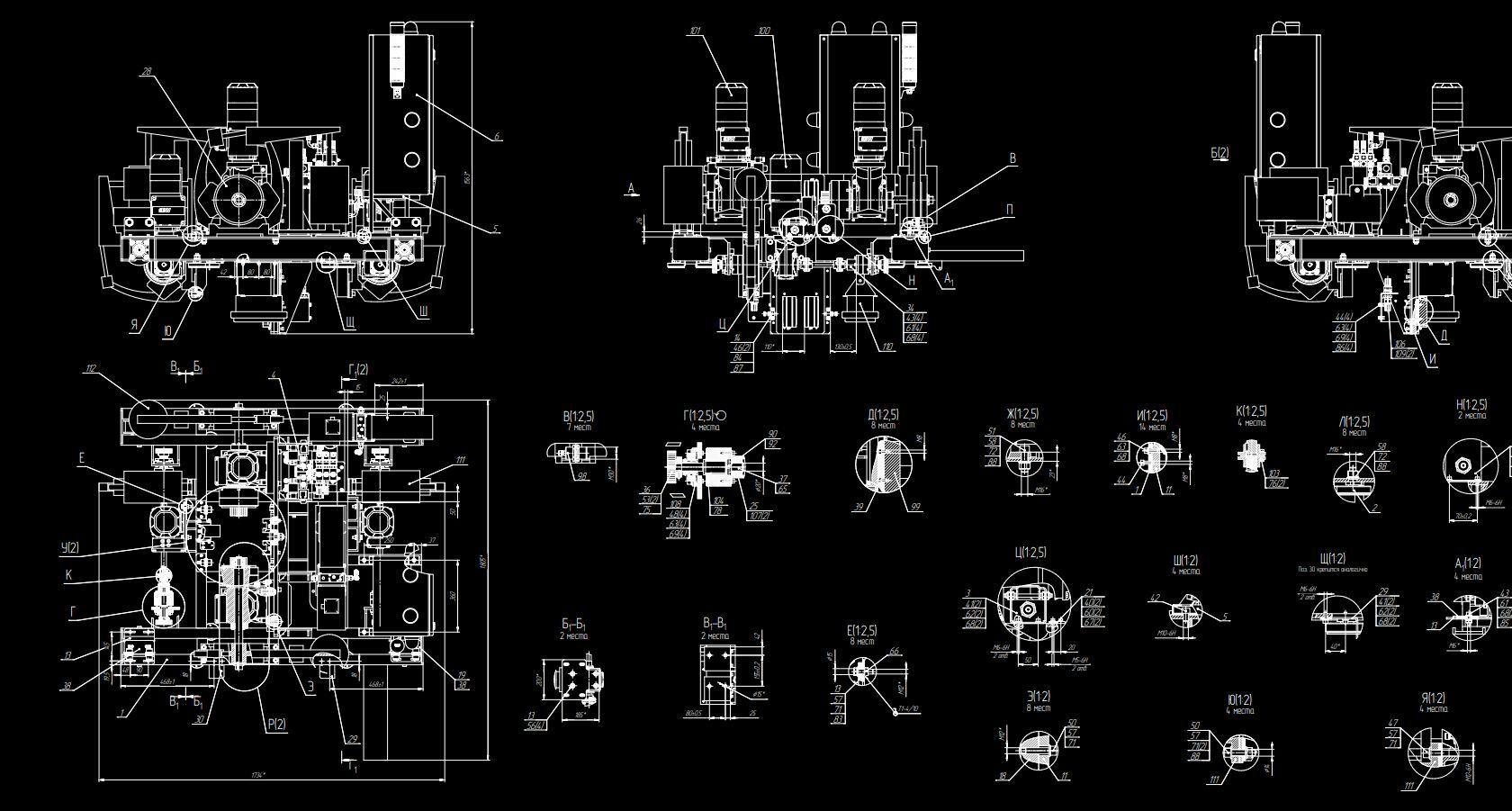
Frames, title blocks, callouts, tables and bills of materials stay where they are. Scans and non-editable PDFs come back as editable files, including drawing frames and title blocks to GOST.
When a new revision comes out, we translate what has changed and reuse unchanged segments from translation memory. We can hand over the project translation memory on request.
We establish what the set contains, the sheet formats, the word count and the share of repetitions.
The quote shows the word-based calculation and the repetition discount. The price is fixed before work starts.
Before translation, we collect the project terminology and agree open points with your specialist.
We prepare a machine draft in our translation environment, using the project translation memory and glossary. Our own automation tools handle some of the operations, which shortens the schedule without reducing the checks that follow.
An in-house editor who specialises in engineering reviews the full text. Editors and translators must pass a three-stage test before they work on projects. We do not deliver raw machine output.
After editing, every file goes through automated checks of numbers and terminology, and a sample goes through linguistic quality assessment (LQA) on a formal scale: terminology, accuracy, fidelity to the source, formatting.
We return the set in the source formats or as editable files, with the layout, frames and title blocks matching the source. Before delivery, we check completeness, text overflow, tables, callouts and sheet numbers.
Projects run on the agency's managed infrastructure, and within the team only the project specialists have access. If external APIs are not acceptable, we agree a closed mode without external services before quoting. → How we work
A supplier of diesel generator sets for Kudankulam NPP, referred to us by the project's general contractor.
Two projects: 137 source files, about 1,035 pages. Certificates and declarations of conformity, operating manuals, equipment passports, verification procedures, test reports, repair documentation and a reliability calculation.
138,000 words, mostly into English. Layout for both projects was quoted separately: 347 pages.
May 2026, two projects back to back. For the second, we translated 16 files (about 533 pages) in 2 working days, including a 252-page seismic test report with graphs and text embedded in images.
Our in-house team did the work.
up to 70%
repetition discount
Translation memory picks out repeated segments across the set, and we charge them at the maximum discount.
1 word
pricing unit
We price per source word, and you know the final figure before work starts. If a contract is priced per page, we count one page as 250 words.
1 glossary
for the whole set
Approved before work starts. Automated term checks catch any deviation from it, and disputed decisions go into the project log.
We build up a translation memory and glossary for your company as we work. On request, we hand them over: the memory in TMX, the standard format supported by the major CAT tools, and the glossary as a CSV or XLSX table. The memory we hand over contains only your projects. With them, future projects cost less and terminology stays consistent, whoever does the translation.
Documentation for NPP equipment of safety classes 1–4; quality assurance programmes and quality plans
Open-pit mining equipment, geology and drilling equipment
CNC machine tools, hydraulics and operating instructions
Refinery and gas condensate processing equipment, pipeline valves
Software localisation, IoT, server equipment and SCADA
AutoCAD drawings, cost estimates and tender documentation
Send your files or describe the job
What happens next: